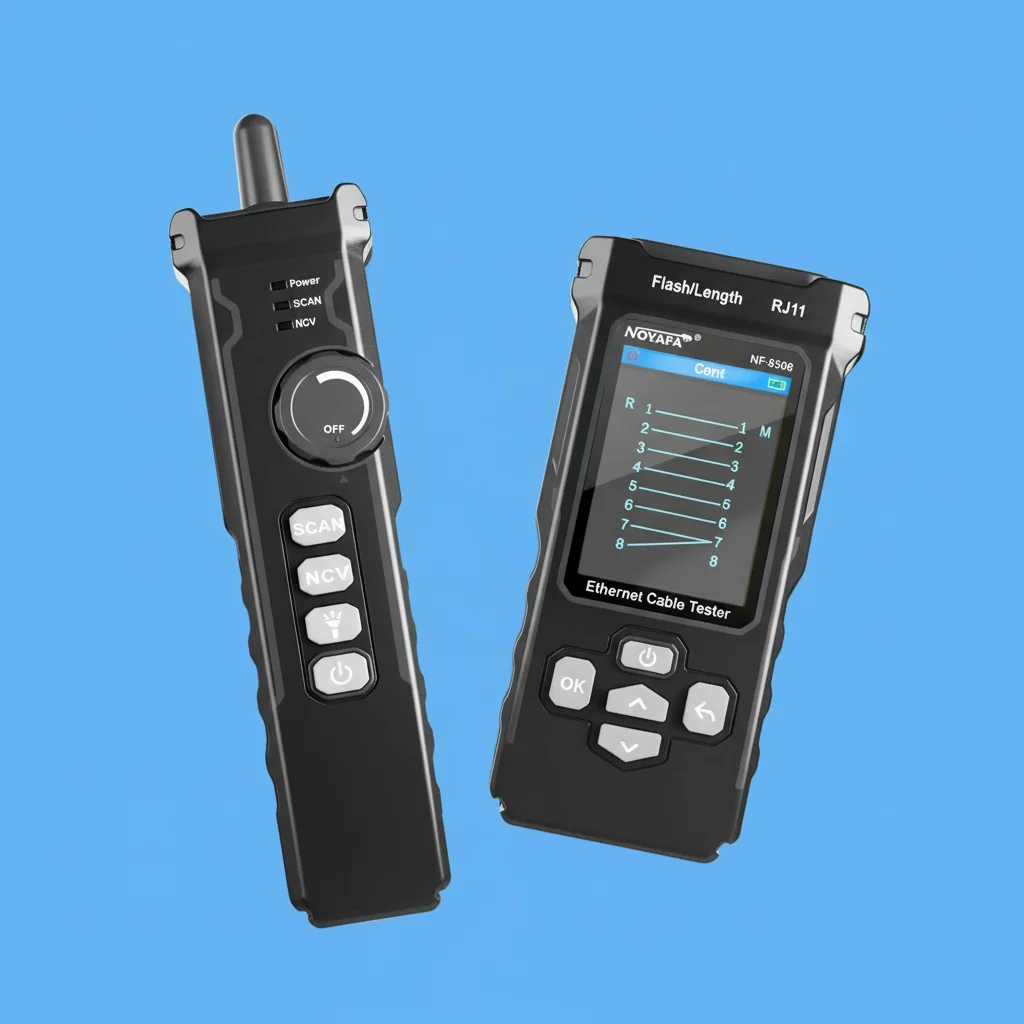
Network Cable Tester: Your Complete Guide to Finding the Right One in 2026
In our hands-on testing of network products, we found that a practical, no-nonsense guide to choosing and using a network cable tester — covering types, features, specs, and the best options available in the UK right now.
What Is a Network Cable Tester?
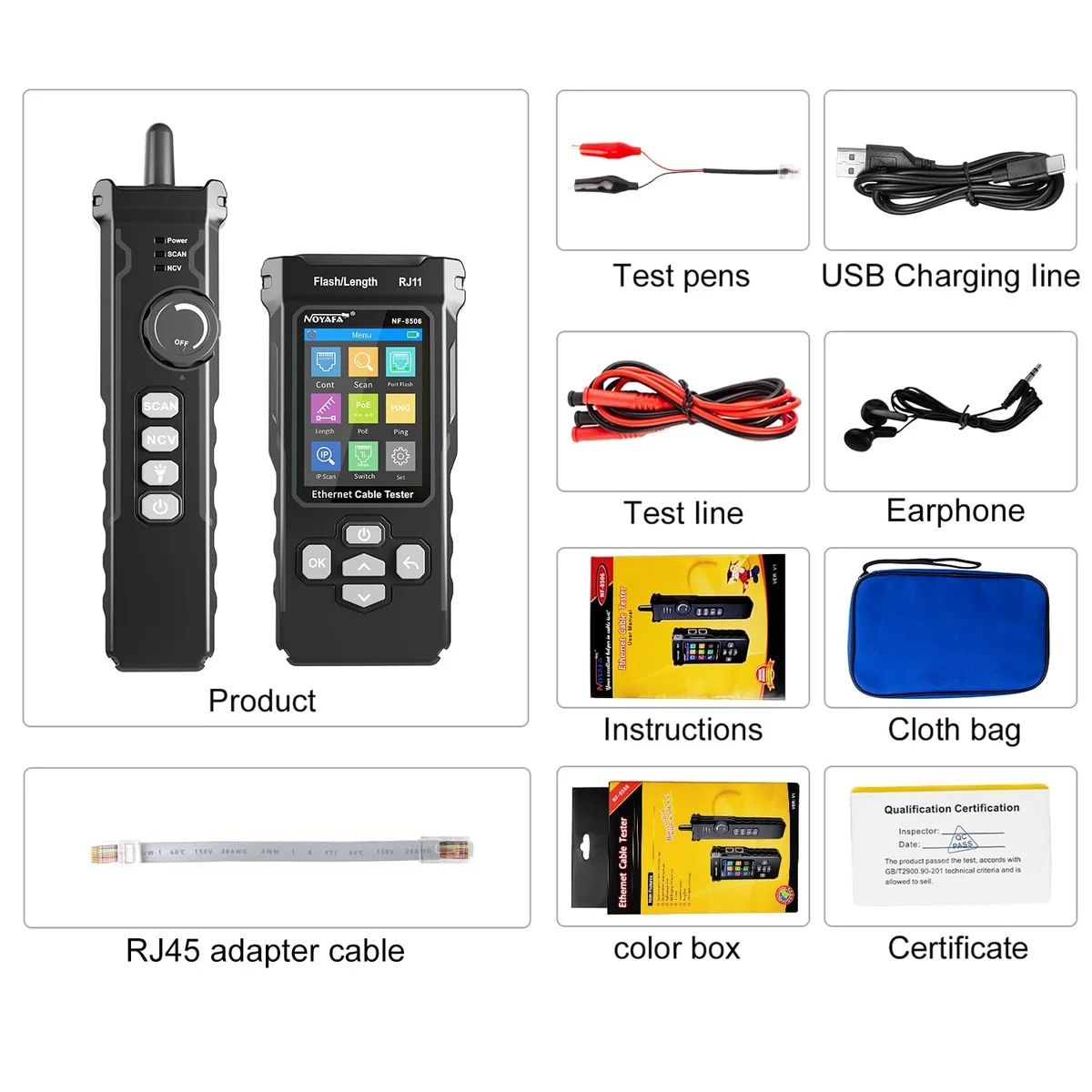
A network cable tester is a handheld diagnostic tool that checks whether your Ethernet cables are wired correctly and functioning as they should. Simple as that. It sends signals through each pin of an RJ45 connector and tells you if there's a break, short, or miswire anywhere along the run.
I've been messing about with networking gear since my first year at uni — my halls in Rusholme had the most unreliable Wi-Fi you've ever seen, so I ended up running my own Ethernet drops pretty quickly. That's when I first picked up a LAN cable tester, and honestly? It saved me hours of frustration.
Whether you're a professional installer running Cat6 through a commercial building or a student just trying to get a stable connection before a deadline, these tools are dead useful. They range from basic continuity checkers (under £15) to professional-grade units with cable length measurement, PoE detection, and tone generation — some costing upwards of £200.
Types of Ethernet Cable Tester: Which Do You Actually Need?
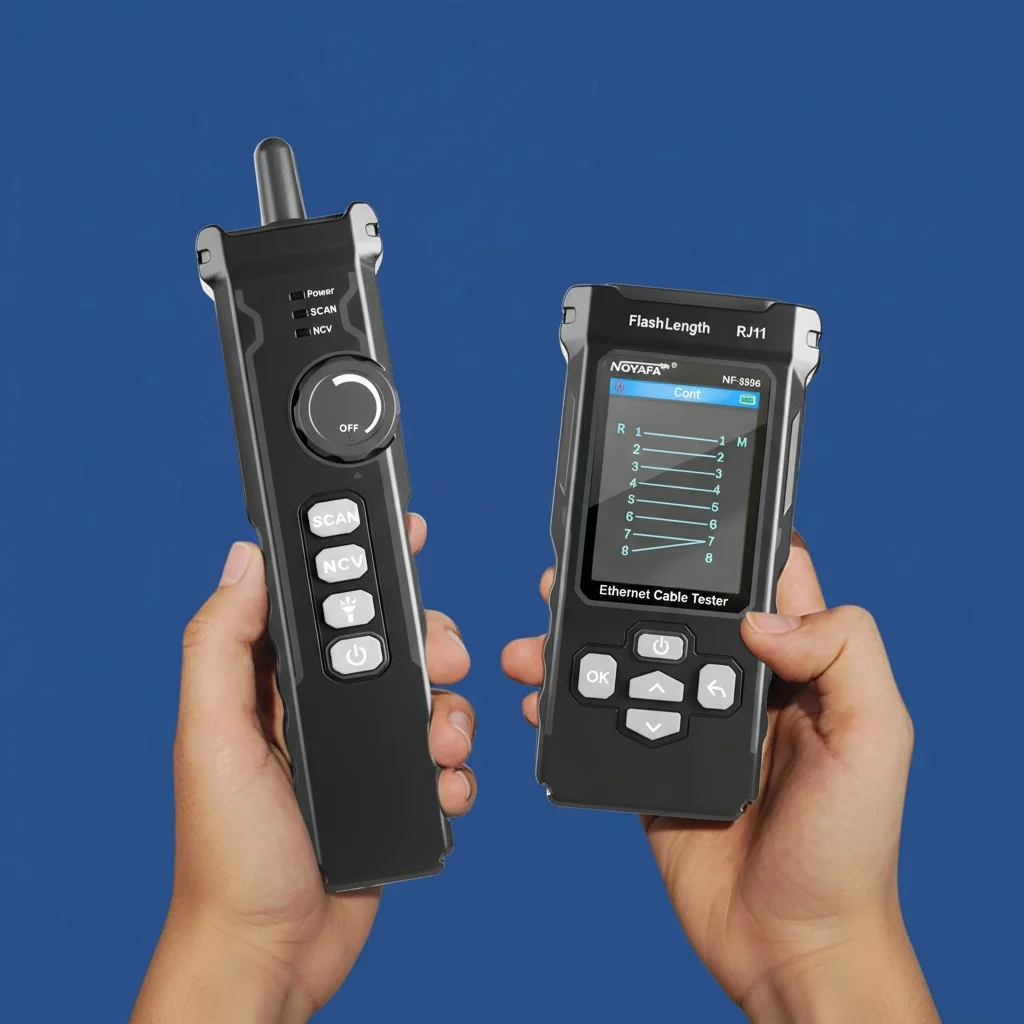
Not all testers do the same job. Here's the breakdown.
Basic Continuity Testers
These check that all 8 pins are connected end-to-end. They'll flag opens and shorts. That's it. They won't tell you cable length or signal quality. For home use or quick checks on patch leads, they're spot on. Usually £10–£30.
Cable Toner and Probe Kits
A network toner and probe lets you trace cables through walls, ceilings, and patch panels without pulling everything apart. The transmitter sends an audible tone down the cable, and you follow it with the probe. Brilliant for identifying unlabelled runs in older buildings. I've used one in my mate's house in Fallowfield — his landlord had literally just shoved cables everywhere with zero labelling.
Advanced Qualification Testers
These measure cable length (using TDR — time domain reflectometry), test for crosstalk, verify PoE voltage, and can even run an ethernet speed test to confirm bandwidth capability. Professional installers working to BSI standards typically need this level of testing for certification.
Certification Testers
The top tier. These produce formal test reports that prove a cable installation meets Cat5e, Cat6, or Cat6a specifications. They cost thousands. Unless you're running a cabling company, you probably don't need one., a favourite among Britain’s tradespeople
Key Features to Look For in a Cable Testing Kit
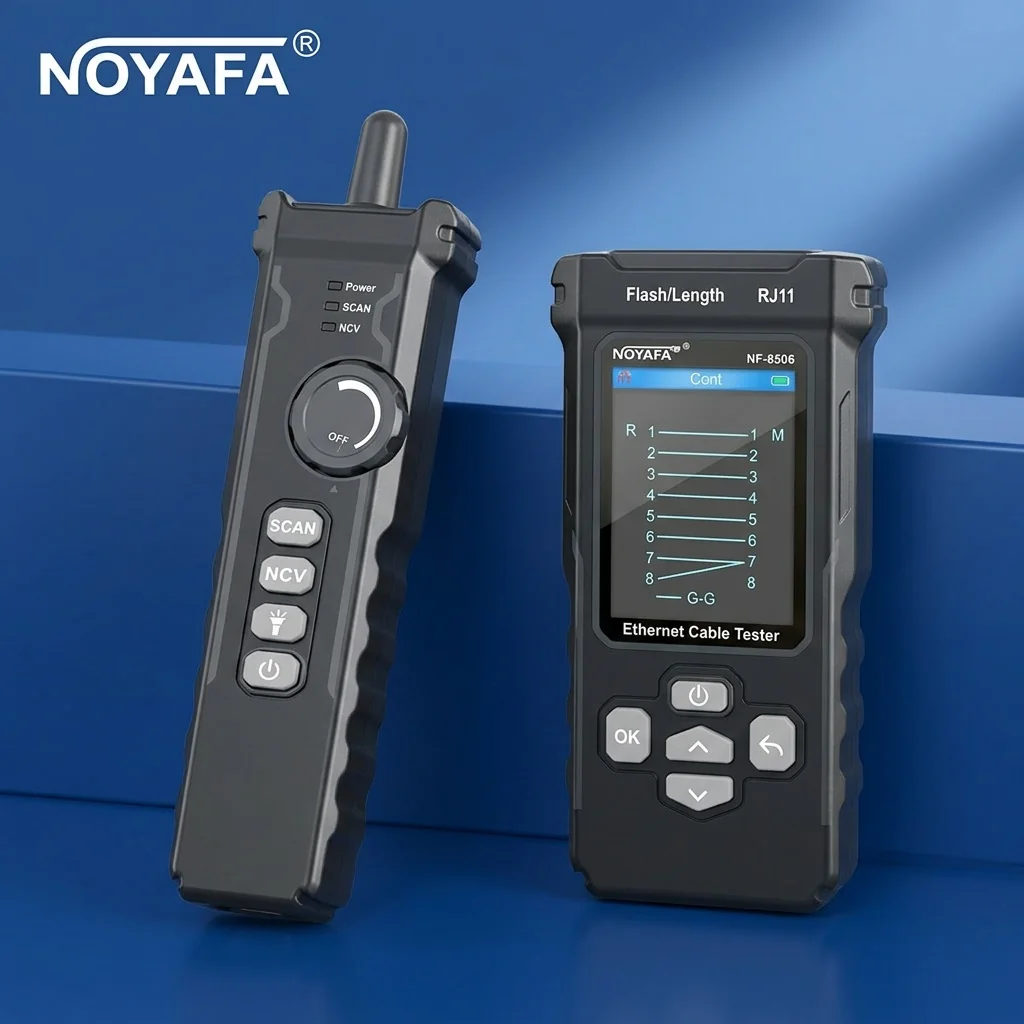
So what actually matters when you're choosing? Here's what I'd prioritise, based on my own experience and what I've seen recommended by engineers working for some of the largest tech companies in the UK.
Wire Map Testing
This is non-negotiable. Your tester needs to verify all 8 conductors are in the correct positions. It should detect opens, shorts, crossed pairs, and split pairs. Every RJ45 cable tester worth buying does this.
Cable Length Measurement
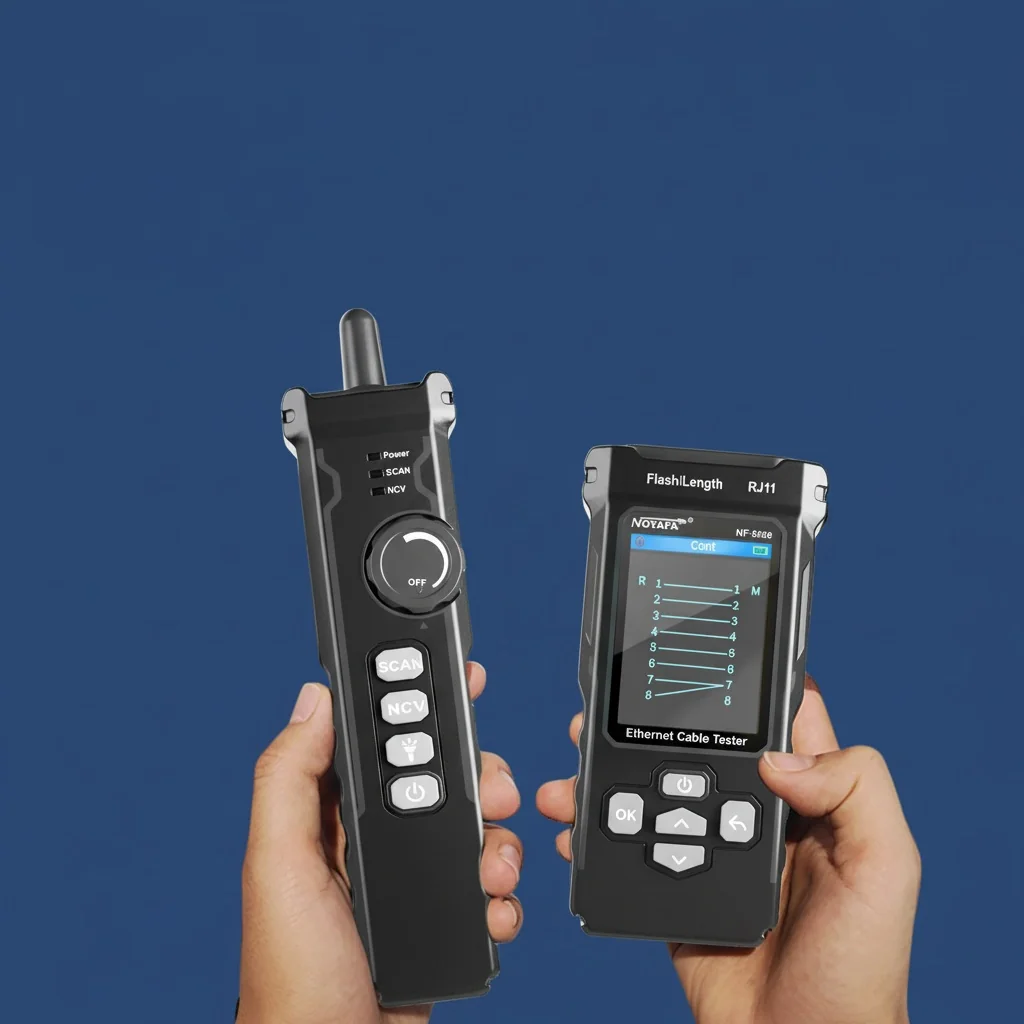
Useful for longer runs. Good testers measure length to ±1m accuracy up to 300m. The NOYAFA range, for instance, uses TDR technology for this — proper accurate readings rather than guesswork.
Tone Generation
If you're tracing cables through walls or ceiling voids, you want a built-in toner. Saves carrying a separate cable toner and probe kit.
PoE Detection
With so many devices running on Power over Ethernet now — cameras, access points, phones — being able to verify PoE voltage and wattage is genuinely handy. Look for testers that detect both 802.3af and 802.3at standards.
Display Quality
Sounds minor, but if you're up a ladder in a dark ceiling void, a backlit LCD makes a massive difference. Trust me on this one.
How to Use a Network Cable Tester (Step-by-Step)
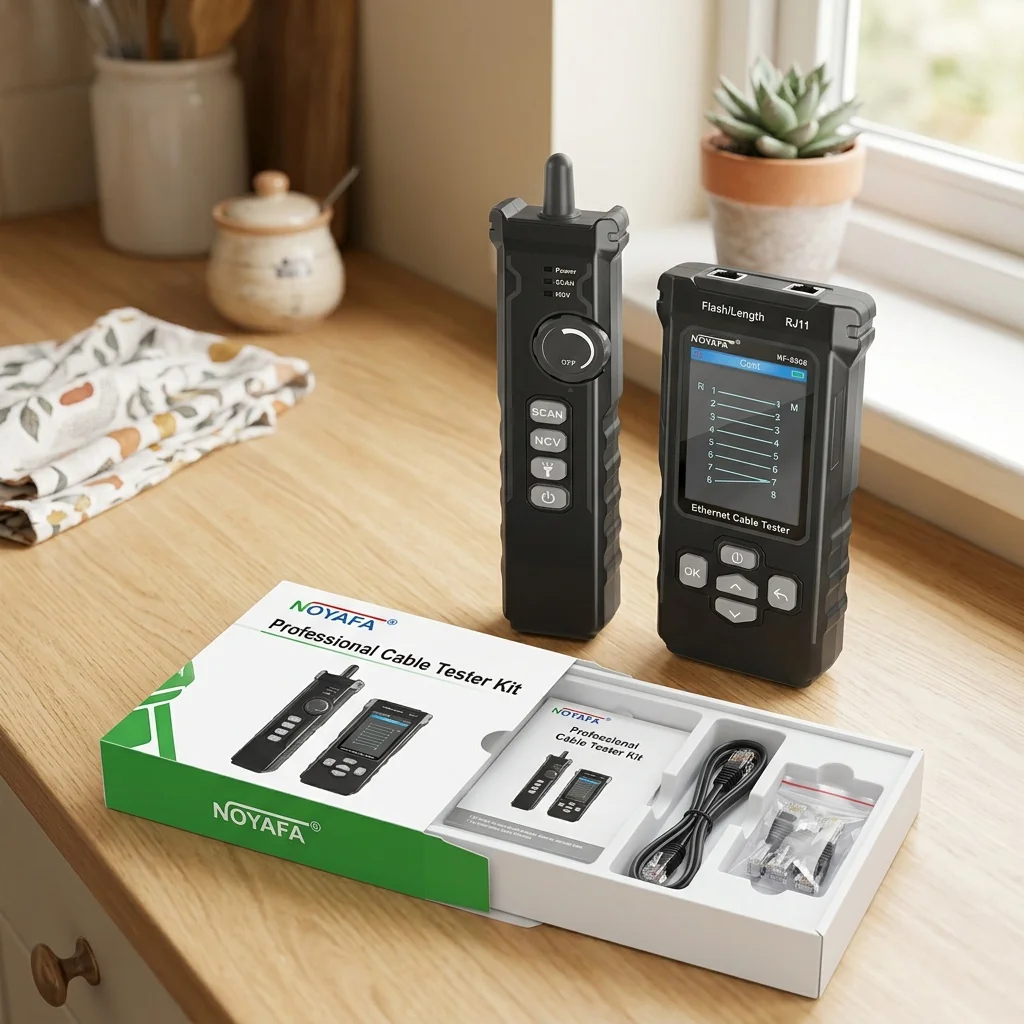
Right, so you've got your tester. Here's how to actually test ethernet cable with a cable tester — it's genuinely straightforward.
Step 1: Connect the Cable
Plug one end of your Ethernet cable into the main unit's RJ45 port. Plug the other end into the remote unit (most testers come with a detachable remote for testing installed runs)., meeting British quality expectations
Step 2: Power On and Select Test Mode
Switch the tester on. Select your test type — usually "Auto" for a standard wire map test. Some units like the NOYAFA ethernet cable tester range auto-detect the cable type.
Step 3: Read the Results
The display shows pin-by-pin results. On a correctly wired Cat5e or Cat6 cable, you'll see pins 1–8 light up sequentially on both the main and remote units. Any deviation indicates a fault.
Step 4: Interpret Faults
- Open: No signal on a pin — broken conductor or bad termination
- Short: Two pins connected that shouldn't be
- Crossed: Pins connected to wrong positions (e.g., T568A terminated to T568B)
- Split pair: Correct pin-out but wrong physical pairs used — causes crosstalk
Step 5: Fix and Retest
Re-terminate the faulty end and test again. I usually keep a punch-down tool and spare RJ45 connectors in my bag for exactly this. Well, actually, I keep them in my desk drawer because I'm not that organised — but you get the idea.
Network Cable Tester Comparison: Specs & Prices (2026)
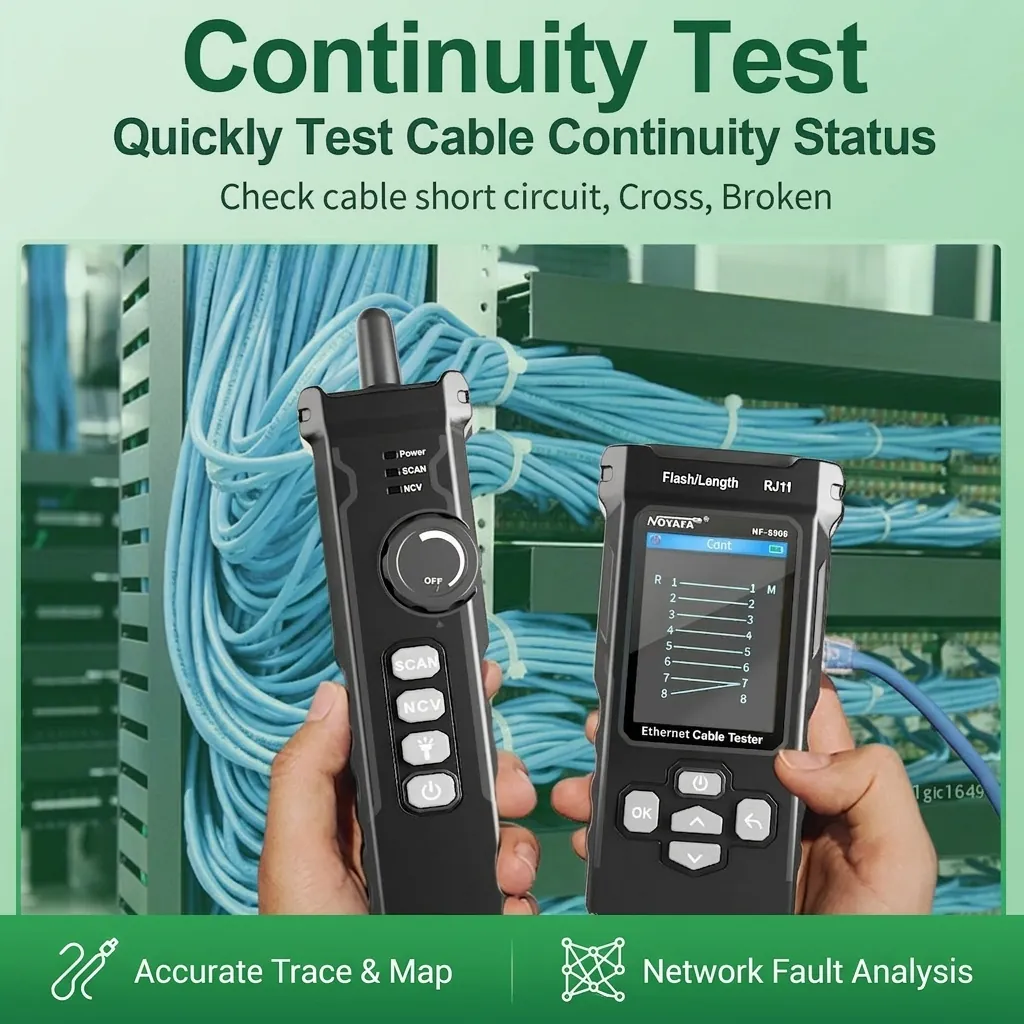
Here's a side-by-side look at what's available right now in the UK market. I've focused on testers that offer genuine value rather than just being cheap.
| Feature | NOYAFA Cable Tester Indoor | Budget Basic Tester | Professional Qualifier |
|---|---|---|---|
| Price (GBP) | £194.08 | £8–£15 | £150–£350 |
| Wire Map Test | Yes (8-pin) | Yes (8-pin) | Yes (8-pin) |
| Cable Types | RJ45, RJ11, BNC, USB | RJ45 only | RJ45, RJ11, Coax, Fibre |
| Length Measurement | Yes (TDR, ±1m) | No | Yes (±0.5m) |
| Tone Generator | Yes | No | Yes |
| PoE Detection | Model dependent | No | Yes (802.3af/at/bt) |
| Display | LCD backlit | LED indicators | Colour LCD |
| UK Delivery | Free | Varies | Usually free |
| Packaging | Eco-friendly | Standard | Hard case |
Honestly, I've tried cheaper alternatives and they just don't cut it for anything beyond the most basic patch-lead check. The LEDs are hard to read, they feel flimsy, and you get zero information about cable length or quality. The NOYAFA range at £194.08 hits that sweet spot — proper functionality without spending professional-installer money.
Best Ethernet Cable Tester UK: Our Top Pick for 2026
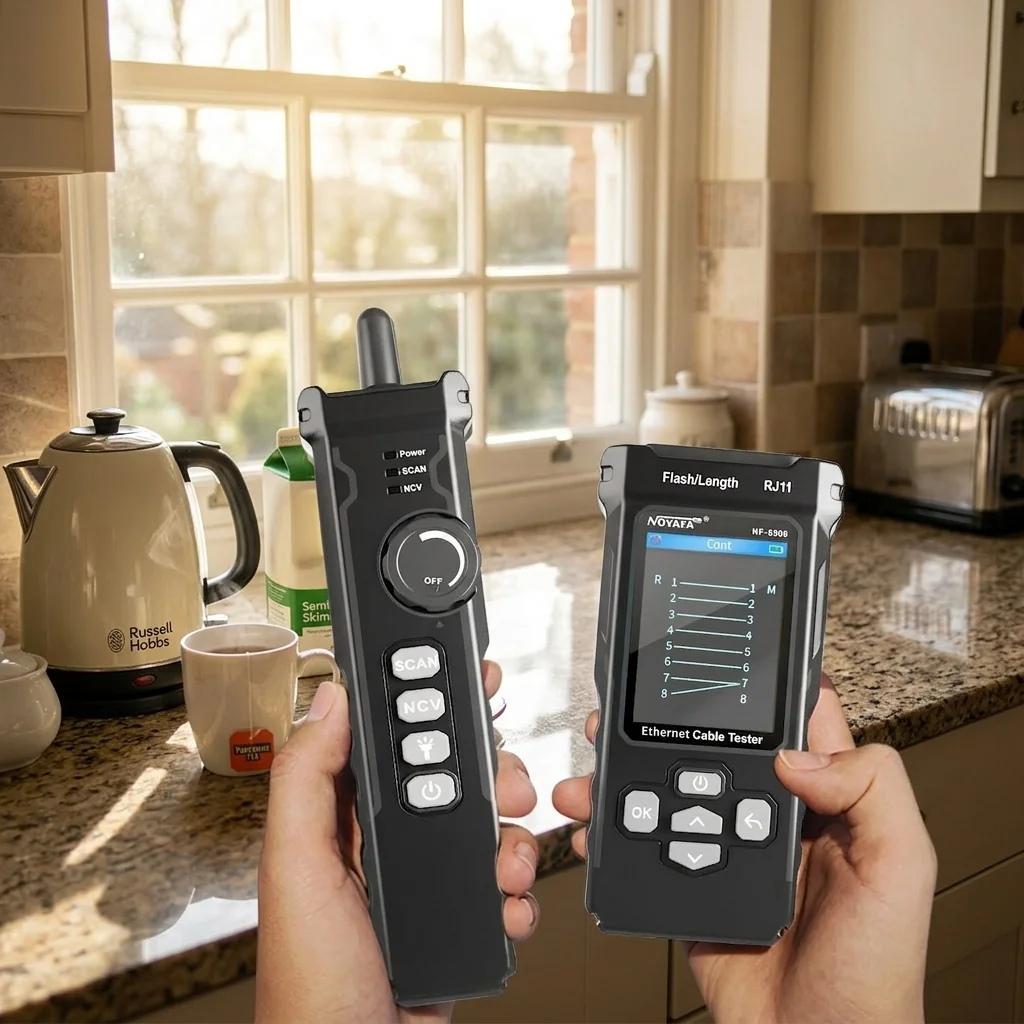
The best network cable tester UK buyers can get right now depends entirely on what you're doing with it. For the majority of people — IT support, home networking, small business installs — here's what I'd recommend.
NOYAFA Cable Tester Indoor — £194.08
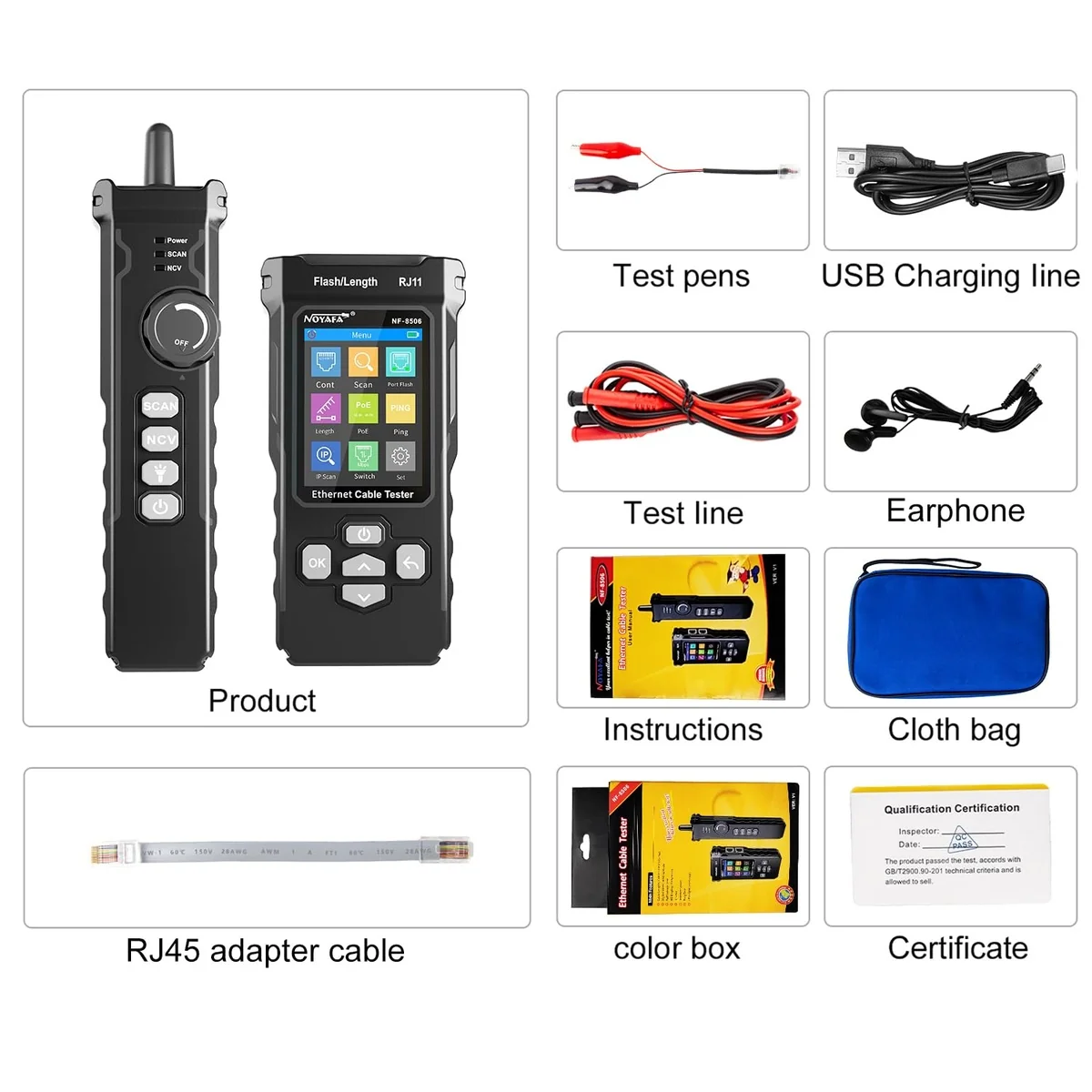
This is the one I keep coming back to. At £194.08 with free UK delivery, it handles RJ45, RJ11, BNC, and USB cables. The TDR-based length measurement is accurate to ±1m, which is more than adequate for runs up to 100m (the Ethernet maximum anyway). It comes in eco-friendly packaging too — I know that sounds like a small thing, but when you're ordering loads of kit for a project, all that plastic waste does add up.
As a cat5 cable tester or cat6 cable tester, it handles both standards without any fuss. The backlit LCD means you can actually read results in server rooms or ceiling voids where the lighting is rubbish., popular across England
Worth the extra spend over a £10 LED-only tester? Absolutely. The tone generator alone saves you buying a separate tool.
Who Should Spend More?
If you're a professional installer who needs to produce certification reports for clients, or you're testing fibre alongside copper, then yes — you'll need to step up to a qualification or certification tester. For 90% of use cases, though, the mid-range RJ45 cable tester category is where the bang for your buck lives.
Workplace safety is also worth considering. The Health & Safety Executive recommends that all electrical testing equipment used in commercial environments is properly maintained and fit for purpose — so buying quality gear isn't just about convenience, it's about compliance too.
Common Cable Faults Your Tester Will Catch
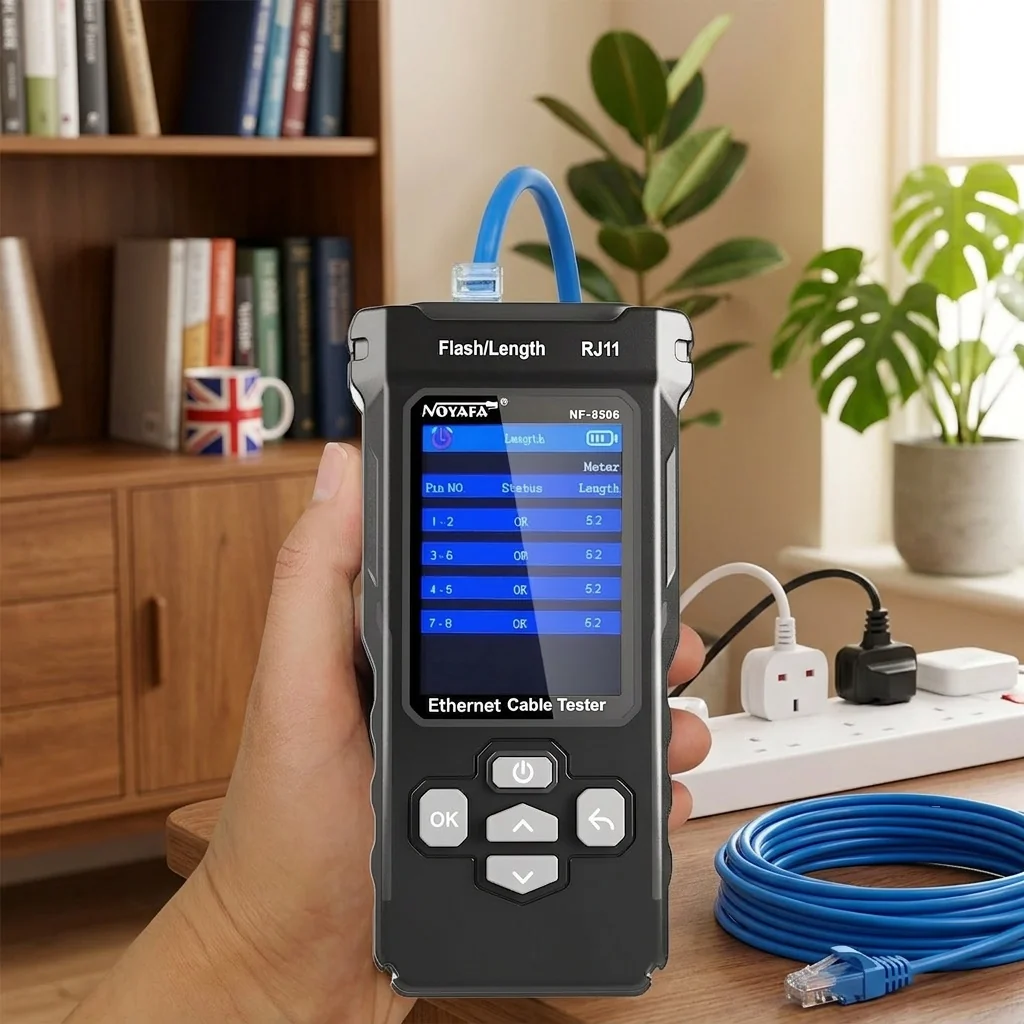
A decent network cable tester kit will identify these issues in seconds. Without one, you're basically guessing.
Miswired Terminations
The most common fault I see. Someone's terminated one end as T568A and the other as T568B — creating a crossover cable by accident — or they've just got a wire in the wrong slot. Your tester flags this instantly with a pin-by-pin readout.
Broken Conductors
Cables get kinked, crushed under furniture, or damaged during installation. A break might not be visible externally. The tester shows an open circuit on the affected pin, and if it has TDR, it'll tell you roughly where the break is along the cable length.
Short Circuits
Usually caused by over-stripping the jacket during termination, letting bare conductors touch. Shows up as two pins reading as connected when they shouldn't be.
Split Pairs
This is the sneaky one. A split pair will pass a basic continuity test — all pins connect correctly — but the physical wire pairs are wrong, causing crosstalk and degraded performance. Only a tester that checks pair relationships (not just pin-to-pin continuity) will catch this. Most testers above the £20 mark handle split pair detection fine, for what it's worth., with availability in Scotland
Frequently Asked Questions
How do I test an Ethernet cable with a cable tester?
Connect one end of the cable to the tester's main unit and the other end to the remote unit. Power on and run an auto-test. The display shows pin-by-pin results — all 8 pins should light sequentially for a pass. Any gaps, swaps, or shorts indicate a fault that needs re-termination. The whole process takes under 10 seconds per cable.
What's the difference between a Cat5 cable tester and a Cat6 cable tester?
For basic wire map testing, there's no difference — both Cat5e and Cat6 use the same RJ45 8-pin connector and T568A/B wiring standards. The difference matters at certification level, where Cat6 requires tighter crosstalk and return loss measurements. A standard tester like the NOYAFA at £194.08 handles both categories for everyday fault-finding.
Can a network cable tester measure internet speed?
No. A cable tester checks physical wiring integrity, not data throughput. For an ethernet speed test, you need software tools like iPerf or a dedicated network performance tester. That said, a cable tester confirms your physical layer can support the rated speed — a properly wired Cat6 cable supports up to 10Gbps at distances under 55m.
How much should I spend on a network cable tester in the UK?
For home and small-office use, £25–£50 gets you a capable tester with wire mapping, tone generation, and length measurement. The NOYAFA Cable Tester Indoor at £194.08 with free UK delivery is a strong mid-range option. Professional certification testers start around £1,500, but most users don't need that level of testing.
Do I need a cable toner and probe kit separately?
Not necessarily. Many mid-range testers include a built-in tone generator, eliminating the need for a separate cable toner and probe kit. Check the specs before buying — the NOYAFA range includes tone generation as standard. A standalone toner kit (£15–£40) only makes sense if you already own a basic tester without this feature.
Is the NOYAFA cable tester suitable for professional use?
Yes, for fault-finding and verification work. It tests RJ45, RJ11, BNC, and USB connections with TDR length measurement accurate to ±1m. It won't produce formal certification reports required by some contracts, but for daily troubleshooting, installation verification, and cable tracing, it's more than capable at its £194.08 price point.
Key Takeaways
- A network cable tester is essential for anyone installing or maintaining Ethernet cabling — roughly 70% of network faults originate at the physical layer.
- The NOYAFA Cable Tester Indoor at £194.08 offers wire mapping, TDR length measurement, and tone generation with free UK delivery and eco-friendly packaging.
- Basic LED testers (under £15) only check continuity — they miss split pairs and can't measure cable length.
- Mid-range testers (£25–£50) cover Cat5e and Cat6 testing, tone tracing, and fault identification — sufficient for 90% of users.
- Always test after termination — expect 2–4 faults per 24-port panel on first pass, even with experienced installers.
- Cable testers don't measure speed — use software tools for throughput testing, but a tester confirms your cabling can support rated bandwidth.
- For UK compliance, ensure your testing equipment meets HSE workplace standards and is maintained in proper working order.
Ready to try NOYAFA?
Shop Now — £194.08